Foot Notes To
album
Invisible by his own lights, John R Cash quietly
turned 51 in February of 1983, a few months before Johnny 99 first
appeared, the Man In black had been hard to find on the charts for better
than a decade, only the novelty of “One Piece At A Time assembling atop
Bill
board for two weeks in 1976, and his was quickly fading shadow at
Columbia. But really Cash was missing only from the charts, both the first
and least important place legends are made.
The first living inducted into the Country Music hall
Of Fame (1980) and the first performer also inducted into the Rock N Roll
hall Of Fame (1992) joined six
years later in that distinction only by his old mate from Memphis Elvis.
Presley (albeit unintentionally) all but killed
country music, and his recent presence in that hall of fame is heavy with
irony, and marketing, Johnny Cash truly belongs both places, for his voice
alone carries across so many generations, genres, and geographies. Elvis
was the voice alone of unchained libido and, after that first inspiration,
lazy. Johnny Cash, more than other singer, grew to become the voice of
America itself, Capturing in his spirit and his laconic phrasing many of
its conflicts and contradictions. All
America
, even today. How many other voices resonate so powerfully with pierced
punk rock kids and their bright-eyed grandparents ? And, no, the Rolling
Stones don’t count. No other singer so deftly linked traditional Carter
Family songs of the 1930’s to the rockabilly of the 1950s, cut classic
country sides in the 1960s, and then carried those hot dripping torches
towards the next millennium.
No, Elvis was about sex, but Johnny Cash came to the
microphone bearing a stronger, higher authority. Notwithstanding George
Burns role opposite John Denver, the deep woody baritone of Johnny Cash
was and is the wise and weathered voice of a sometimes angry God, and of a
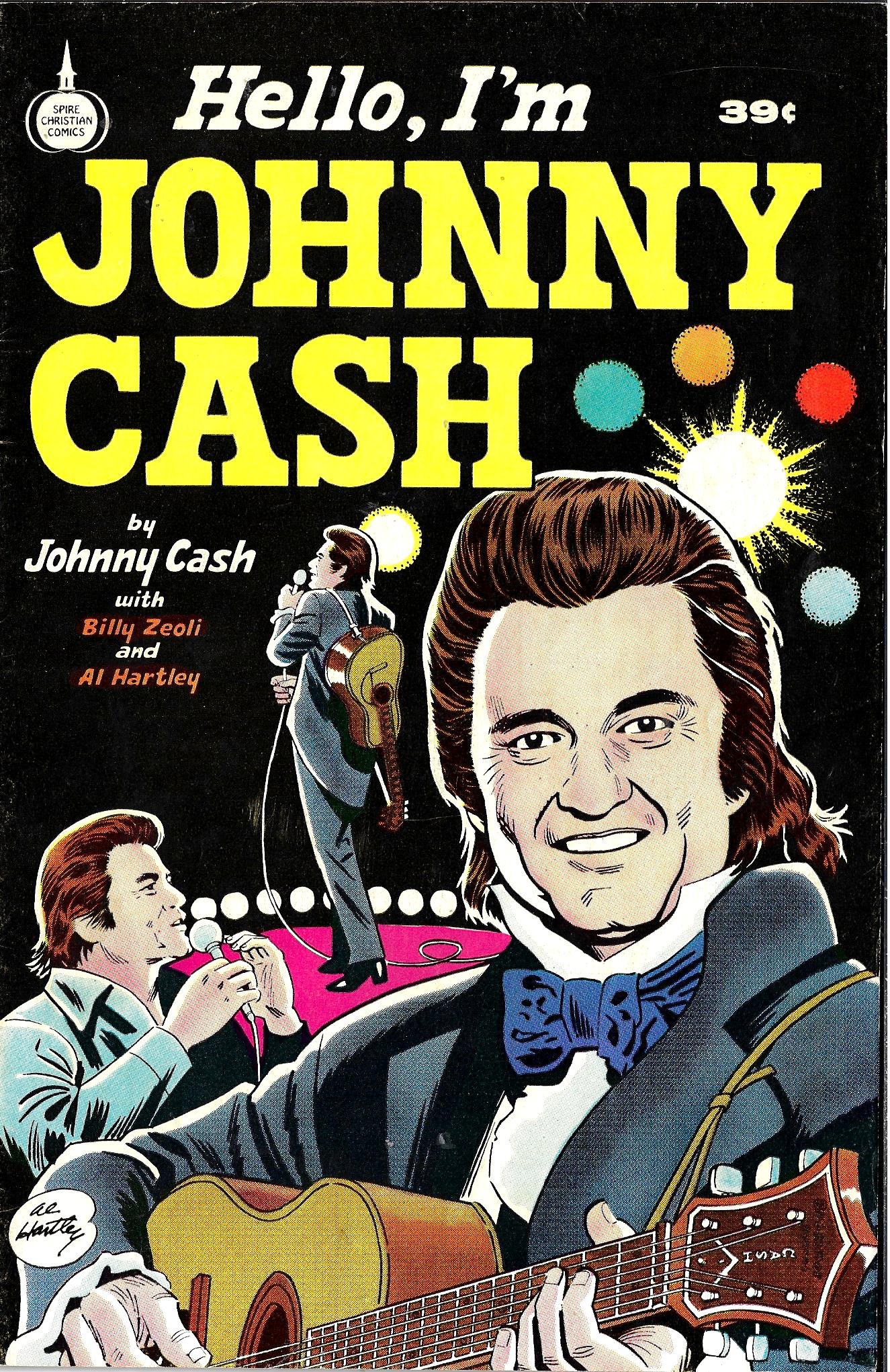
man who is still a sinner. Hello I’m Johnny Cash, the greeting with
which he began his short-lived and much-missed TV series in the late 60s
is the distinctly American counter-point to Sean Connery’s “Bond,
James Bond” and for all that a richer promise. The difference
between 17th century minister Jonathan Edwards and a
contemporary Unitarian, as it were.
So despite the well-deserved kudos they received,
American Recordings and Unchained didn’t signify Cash’s creative
rebirth in the 1990s so much as reaffirm an artistic vision that had been
fairly constant thought four decades, whether of not buying and
programming public notice. Obvious, all that, and still too easily taken
for granted. Still Johnny Cash was fifty-one-years old in 1983, his place
un-slowed, his future oddly uncertain. He was also seven year removed from
his last big charted success, and through he knew he could tour to large
and happy audiences so long as he wished, , his remained a restless and
creative spirit. Question was, would anybody at his label or at radio,
that is, still listen to his future.
Cash was only a few years from turning in a album he
says he called Chicken In Black (there’s even supposed to have been a
video) CBS unaccountably paid for the Man In Black wearing a chicken suit
and forcing the label to drop him. Not surprisingly, this effort at
self-parody went unreleased, though its prospect gives pause.
Away, it is possible, staring through the dusty light
of the past, to return to Johnny 99 today expecting to hear the work of an
artist flailing for an audience, marking time possible, too, that his
label heard it that way in 1983. Indeed, Cash himself spares not a word
for the album in the annotated discography which concludes his second,
self-titled autobiography. Ah,
but is it closer
Cash had worked with producer Brian Ahem then husband
to Emmylou Harris before, on 1970s well-regarded Sliver Anniversary, so
this was not a pairing simply indented to update an ageing star’s sound
indeed, what today seems plain about Johnny 99 is how coherently it
nestles amid the cannon. In many ways it is an archetypal Johnny Cash
record, highlighting the works of, young songwriters, celebrating his
Christian faith, surveying
America
’s bloody past. And between daughters Carlene and Rosanne, son-in-laws
Nick Lowe and Rodney Crowell, and a young Marty Stuart, then in his band,
plenty of fresh ideas were running round his house, or tour bus.
In the studio for his album, Cash was surrounded by a
pride of young lions that included Stuart (Guitars) Glen D Hardin
(keyboards) Jo-Sonnier (accordion) and Norton Buffalo (harmonica). That
comparative youth was paired with legendary drummer Hal Blaine and
guitarist James Burton, with vocals support from June Carter (dueting on
“Brand New Dance” a sweet kind of sequel to the fire of “Jackson”
and Hoyt Axton. Not precisely
Nashville
A-Team. CA. 1983, but nevertheless a formidable collection of talent, and
in any event they recorded in
Los Angeles
.
All that tends to sell Johnny Cash a little short,
for his ears have always been open to the work of gifted songwriters, from
a young Bob Dylan to Kris Kristofferson to Shel Silverstein,, from Joh
Prine and Steve Goodman to Bruce Springsteen. And in selecting two songs
from Sprinsteen’s bleak, acoustic
Nebraska
, Cash had certainly found a kindred spirit. Indeed, Charles R, Cross,
then editor-publisher of Backstreets, the Springsteen quarterly, wrote,
Johnny Cash was born to sing Bruce Sprigsteen’s Johnny 99. There’s an
ancient wisdom in his voice that befits the material and is lacking in
Springsteen’s version. And, anyway, if
Columbia
meant to market Johnny Cash to a younger audience by simply device of.
cutting a few Springsteen songs, that message never got to their art
department. The tightly cropped cover photo shows our hero wearing a gray fedora, a blue shirt, and a
gray sport coat. The Man In Black as
government agent. Not a rebel, this visage staring plain and firm across
the years, but a grim elder statesman.
Presumably that image cements the singer’s role as
Joe Roberts in the opening “Highway Patrolman” it proves to be the
definitive reading of a song of the album. “Man turns his back on his
family, he ain’t no good” Johnny Cash sings, bestowing upon those
words a gravity Springsteen has yet to summon. But then, Cash has long
been surrounded by family, his family and the Carter clan in which he
married – and Springsteen has always been a loner. Indeed, and despite
the song’s point of view Springsteen’s sympathies always seemed (to
his listener anyway) to be with the younger brother, the messed-up
Vietnam
veteran prone to fits of violence. Cash gives his voice completely to the
middle-aged Joe Roberts (nothing’s better than blood on blood) creating
a rich vocal tapestry full of sadness and quilt and resignation.
The balance of the songs and songwriters are
well-chosen notably Guy Clarks new cut road, and two from Englishman Paul
Kennerly (oddly Emmylou Harris’s third husband) “That’s the Truth”
and “Brand New Dance”. But even that makes too simple a story of
Johnny 99, remember, counts among his friends not only the Outlaws but
Bill
y Graham, and his visited with every president in the White House since
Richard Nixon. Even more to the point, he left Sun Records way back when
because he wanted to cut out a gospel album and
Columbia
would let him. (There again, is Cash broad reach across the strata of
society). And so it ought not to be a surprise that one of the strongest
vocal performances on Johnny 99 surfaces on its sole religious number
“Ballad Of The
Ark
”.
Better still is “Joshua
Gone Barbarous”, part allegory, mostly a classic labor ballad
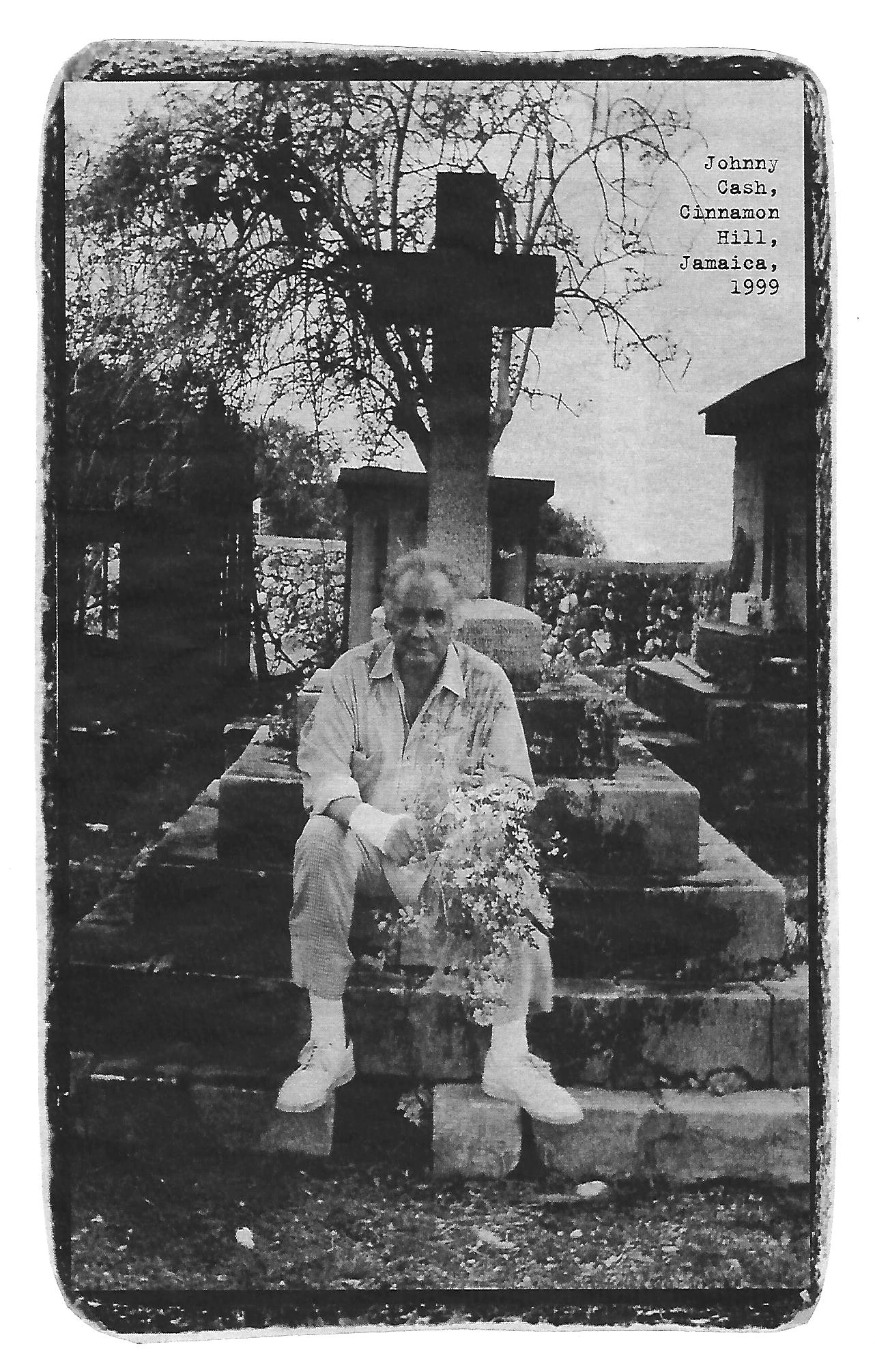
transported tp the Caribbean world cash had to come up to know from his
vacation home on a hill in Jamaica. Hoyt Axton’s deep baritone adds even
more weight, somehow filling in the otherwise unexplored space below Cash.
Followed hard on by the classic western outlaw story of “Girl From The
Canyon” Johnny too bad, indeed. But for his role amid the highwaymen
(joining Willie Nelson, Waylon Jennings, and Kris Kristofferson ) Cash
would spend most of the 80’s out of the spotlight- invisible, to repeat
his words. Columbia dropped him, Mercury put out a few records but
couldn’t make anything happen, and ultimately took rock producer Rick
Rubin and (Def) American, a label removed far, from Nashville to return
Cash’s to the musical background
All of which serves to make Johnny 99, long deleted
and as long sought by Springsteen collectors, an intriguing snapshot. What
was. What might have been. Certainly it’s not Johnny Cash’s work, but
as certainly it is work which defines the possibilities and promises of
his restless, roving spirit.
|