THE CLASS OF 55
Through The
Of A
Fan
Sam
Phillips

January 3, 1923 - July
31, 2003


The late Sam
Phillips did so much in his 80-year life span that he will be eulogized
and appreciated for many years to come. From his tiny little Sun Records
recording studio at 706 Union Ave. in Memphis, he sent out to the world
the exquisite blues of B.B. King, the raw power of Howling Wolf and the
haunting harmonies of the penitentiary group, the Prison Aires. He showed
that the black blues and the country blues were flip sides of the same
expressions of a shared life. He captured the raw emotion of Southern
music -- whether it was white or black. He was often criticized by whites
for recording blacks and by blacks for recording whites. With Elvis
Presley, he invented rock ‘n’ roll. And then -- just to sweeten the
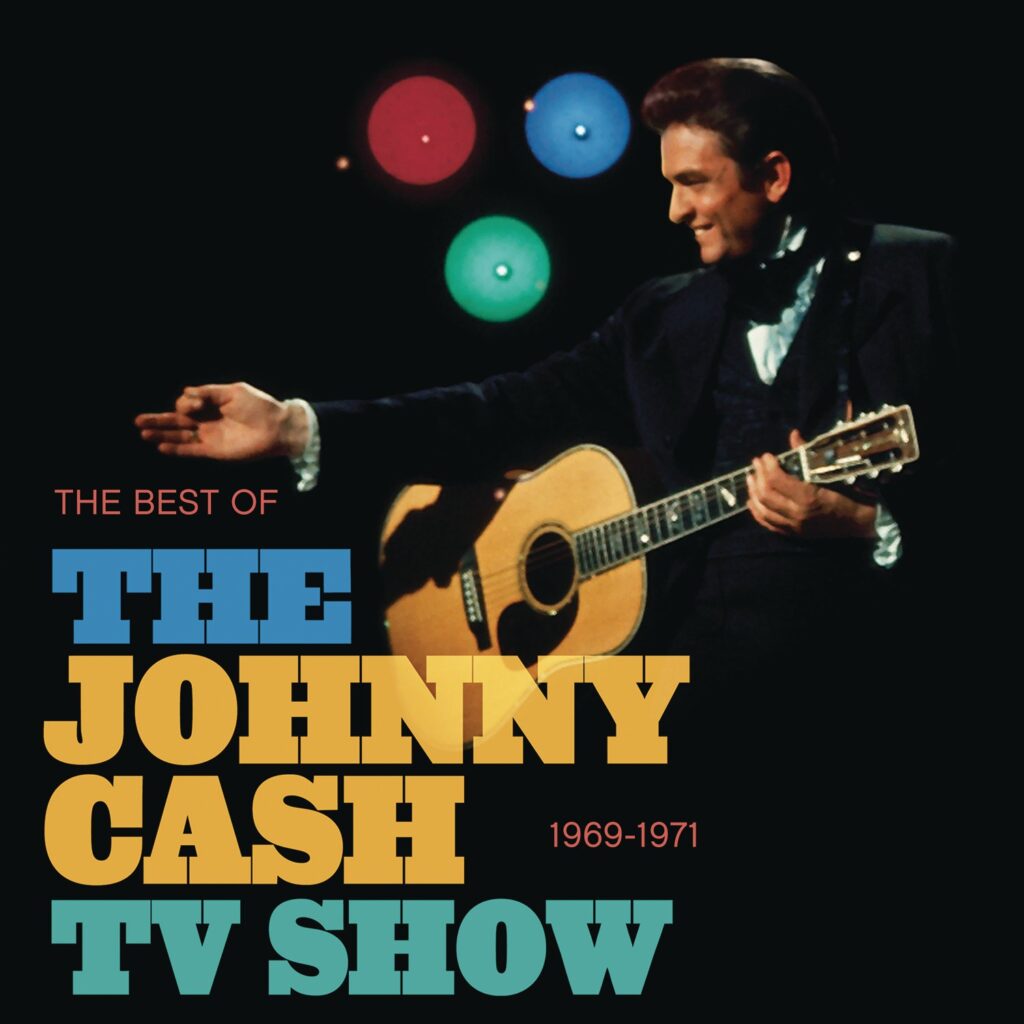
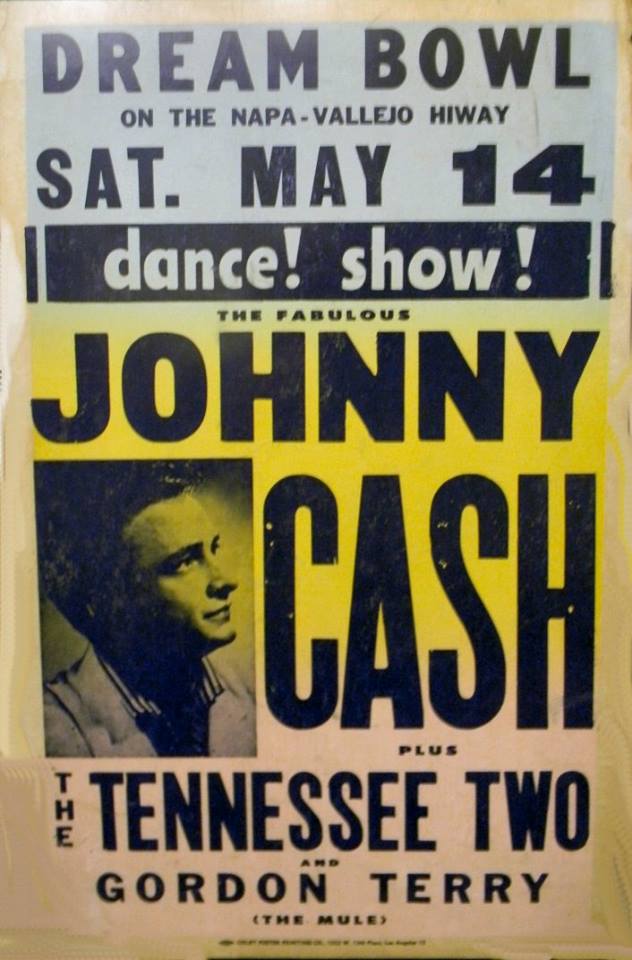
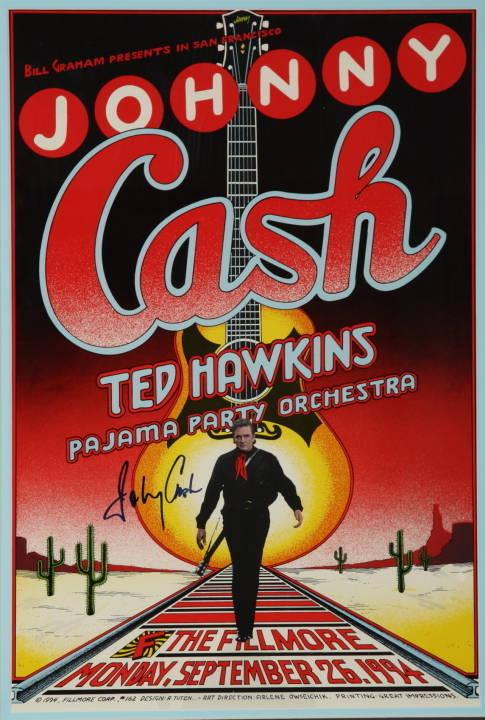
mix -- he threw in Johnny Cash, Jerry Lee Lewis, Roy Orbison and Carl
Perkins. It’s still an understatement to say that he changed the world.

Along the way, he permanently changed country
music and Nashville
when the fledgling producer Billy Sherrill was installed in Phillips’ Nashville
studio, where Sherrill went on to produce monumental hits by George Jones,
Tammy Wynette, Tanya Tucker and many others. In many ways, Sam set the
agenda for rock and country. And that’s a pretty good legacy to take
into eternity with you.
Interviewing Sam was like sitting at the feet of Moses, with lightning
bolts striking all around you. He would warm to a particular subject and
start to swell up a little bit like the best preachers do, and then he’d
have to rise to his feet and start to pace as he orated and preached. His
eyes would widen and the pupils would go black as he fixed you in his
mesmerizing gaze. He may suddenly drop to one knee, as a preacher would,
to command your full attention. Music is power, he thundered. He could
preach that message a hundred different ways from Sunday, and the sermons
always ran to a really long time but always made perfect sense -- once you
thought it out -- and always were right.
Phillips’ most lasting lesson was that music
really was empowerment -- before that politically correct word came into
fashion. Sam said music was power, and he was dead on right with that one.
His stable of Memphis
horses changed popular music and American society and forever changed the
way popular music would be viewed, or performed or recorded.
One of the most interesting things Phillips ever did will undoubtedly
remain a historical footnote. But I find it fascinating. Sam, who was
fascinated with radio since childhood, decided that he wanted to launch an
all-female station. Radio then, much more than it is now, was a male
bastion, a genuine boys’ club. But Sam wanted to try something
different.

And he did. Acknowledging publicly that radio was a
male-dominated industry, Phillips launched Memphis
station WHER in 1955 as “the first all-girl radio station in the
world.” All the employees were women -- announcers, sales, news staff,
managers, music librarians, everyone. Many of the employees had no radio
experience because entry jobs for women in radio were scarce indeed. But
they learned very quickly.
“One thousand beautiful watts” was the station’s slogan, and many
critics initially dismissed the station as a novelty. But Phillips was
dead serious and WHER became a serious station, as well as a thorough
training ground for women in radio.
The station lasted into the early ‘70s. By that time, enough doors had
been broken down that an all-women station was no longer necessary. As
Phillips predicted, WHER legacy was in breaking down barriers against
women in radio. Just as Sun Records wrought a major revolution in music,
WHER wrought a smaller -- but just as valid -- revolution in radio.
July 31, 2003
Rock 'n' roll
pioneer Sam Phillips, discoverer of Johnny Cash, Elvis Presley and
many others greats, dead at 80
Sun Records founder Sam Phillips
died Wednesday (July 30) in Memphis at the age of 80. The Country Music
Hall of Fame member had been ill for several months.
As the record producer and label executive who launched the careers of
Johnny Cash, Jerry Lee Lewis, Carl Perkins, Roy Orbison and Charlie Rich,
his independent spirit altered the course of country and rock ‘n’
roll. But as the visionary who first recognized the talent of Elvis
Presley, Phillips literally changed the world.

Born Jan. 5, 1923, on a tenant farm in Florence, Ala., Phillips worked at
radio stations in Alabama and Tennessee, becoming an announcer at WREC in
Memphis in 1945. By 1950, he had established his Memphis Recording Service
studio at 706 Union Ave., where he recorded future blues legends Howlin’
Wolf, B.B. King and James Cotton. A year later, he used Ike Turner’s
band to produce singer Jackie Brenston’s “Rocket 88” -- considered
by many to be the first rock ‘n’ roll record.
Having previously served as a talent scout for other record labels,
Phillips founded Sun Records in 1952 to specialize in rhythm & blues.
Sun’s initial catalog included hits by acts such as Rufus Thomas and
Little Junior Parker's Blue Flames.
With a strong understanding and appreciation of the blues, Phillips had a
long-standing desire to mix the music with the country sounds he’d grown
up listening to on radio stations such as Nashville’s WSM. Lightning
flashed and the planets aligned in 1953 when 19-year-old truck driver
Elvis Presley wandered into the studio to record two songs as a gift for
his mother. Phillips was about to make history. With musical backing from
guitarist Scotty Moore and bassist Bill Black, Presley’s first
commercial recording more than fulfilled Phillips’ dream. Released in
the summer of 1954, it was a two-sided hit -- a cover of rhythm &
blues singer Arthur "Big Boy" Crudup’s "That's All
Right" with a revved-up arrangement of Bill Monroe’s "Blue
Moon of Kentucky."
In a deal created by Presley’s manager, Colonel Tom Parker, Phillips
sold Presley’s recording contract to RCA Records in 1955. Sun Records
continued to thrive with hits including Cash’s “Folsom Prison Blues”
and “Hey Porter,” Lewis’ “Whole Lotta Shakin’ Goin’ On” and
“Great Balls of Fire,” Perkins’ “Blue Suede Shoes” and “Honey
Don’t,” Rich’s “Lonely Weekends” and Orbison’s “Ooby Dooby.”
"In no way was I attempting to chastise or corrupt or do anything
that would be adverse to the great basis of country music and its
experiences," the flamboyant Phillips told CMT.com
before his 2001 induction into the Country Music Hall of Fame. "Many
things were being done in Nashville at the time that I thought were good.
I really didn't have a desire to outdo Nashville -- or New York or Los
Angeles. I just had my own feelings about the blues and, especially,
Southern white and black gospel." Referring to Sun Records’ heyday,
Phillips once noted, "We're all crazy. But it's a type of insanity
that borders on genius. I really feel that. To be as free as you have to
be for any kind of music, you almost have to be in another dimension. And
to do the broad expanse of rock ‘n’ roll takes an element of mind
expansion that people less creative would term insanity." While
historians would later question why he sold Presley’s contract to RCA
for a mere $35,000, Phillips used part of the money to become an investor
in a burgeoning hotel chain in the early ‘50s -- a company named Holiday
Inn. Having accrued a fortune from his investments, Phillips sold Sun
Records and its catalog to music industry veteran Shelby Singleton in
1969.
In later years, Phillips and sons Knox and Jerry operated the Sam Phillips
Recording Service and a music publishing company. Phillips came out of
retirement briefly to join his sons in co-producing John Prine’s 1979
rockabilly-influenced album, Pink Cadillac.
Phillips joined the Rock and Roll Hall of Fame in 1986, the first year of
inductions. It took another 15 years for him to become a member of the
Country Music Hall of Fame. When the induction took place during a private
dinner in Nashville, Phillips seized the moment to embark on a lengthy
monolog that rambled through several tangents involving the music
industry. With the fire and vocal delivery of an evangelist at a tent
revival, Phillips preached the gospel as he knew it -- about how great
music has the power to improve all mankind.
Sam Phillips knew great music. And he understood that great music often
defies simple categorization.

Carl Perkins & Sam Phillips
There's Good Rockin
Tonight
PBS - DVD

historians may never agree about where and where Rock N
Roll was born. But all historians do agree that an entrepreneur in the
world music named Sam Phillips began a revolution and spawned a legacy
when he created Sun Records - the place where Elvis Presley, Carl Perkins,
Johnny Cash, Jerry Lee Lewis and so many others their start. If this story
of Sun Records was merely the story of the discovery and emergence of a
single performer - Elvis - it would be astonishing enough. But it is not.
It defines some of the most appealing roots of American popular taste, and
it all happened in Memphis. The work of many original Sun artist is
reprised in this two hour American Master film by such performers as Paul
McCartney, Jimmy Page and Live, several accompanied by Elvis original
sideman Scotty Moore and DJ Fontana. The Film also includes a moving
rendition of Lonely Weekend with Jerry Lee Lewis and Matchbox and a
emotional reunion of old Mississippi Delta musicians.
Good
Rockin Tonight - The Legacy Of Sun Records

Sire Label CD - 31165-2
Track List
-
That's Alright -
Paul McCartney
-
Mystery Train
- Jeff Beck & Chrissie Hyade
-
My Bucket's Got A Hole In It
- Jimmy Page & Robert Plant
-
Blue Suede Shoes -
Johnny Hallyday
-
Whole Lotta Shakin Going On
- Elton John
-
Blue Moon Of Kentucky -
Tom Petty & The Heartbreakers
-
Sittin On Top Of The World -
Van Morrison & Carl Perkins
-
Don't Be Cruel -
Bryan Ferry
-
Red Cadillac And A Black
Moustache - Bob Dylan
-
Just Walkin In The Rain
- Eric Clapton & The Impressions
-
Lonely Weekend -
Matchbox Twenty
-
Who Will The Next Fool Be
- Sheryl Crow
-
I Walk The Line
- Chris Issak
-
Drinkin Wine Spo-Dee-O-Dee
- The Howling Diablos & Kid Rock
Revised: September 03, 2007.

|