THE CLASS OF 55
Through The
Of A
Fan


THE
HOMECOMING
None of them were originally from Memphis,
but around thirty years ago they were drawn to the city, one-by-one. Carl Perkins arrived
from nearby Jackson, Tennessee. Then came Johnny Cash Arkansas, Jerry Lee Lewis up the
river from Louisiana and, finally, Roy Orbison from Texas. They were all following the
footsteps of Elvis Presley.

Like Presley, they recorded for producer
Sam Phillips at the Sun Records Studio on Union Avenue. Out of a small 18-by-30 foot room
they created a new music called rockabilly that blurred both musical and racial divisions.
Who can forget Lewis "Whole Lotta Shakin Going On" Perkins "Blues
Suede Shoes" Orbinsons "Ooby Dooby" or Cash "I Walk The
Line" these songs help spark a revolution in popular music that was echoed in other
American cities throughout the mid fifties.
Eventually these four artists, each singular created
force into himself, left Sun Records for seemingly greener pastures. Like Presley, their
personal lives seemed marked by an unlikely degree of tragedy and their careers suffered
too from ups and downs. The record industry grew and Cash was labeled a country artist and
Roy Orbison pop. Lewis was first a rock n roller and then country and Perkins swang back
and forth.

Sun Recording Sudio
In September of 1985, these four men returned to Memphis
and recorded together for the first time ever. Bringing them together was
another hero of Memphis music producer Chips Moman who had just fled Nashville to return
to Memphis himself. They all convened, this "Class Of 55" for a simple purpose
to reassert the vitally of their art outside of the stifling definitions of the music
industry and to reassert the vitality of Memphis as a music-making center of still great
potential
They spent two days in the original Sun Studio where
their careers had begun thirty years ago and then two more of the American Studio. Working
with them was the 827 Thomas St. Band that Moman had created an incredible string of hits
with in the late sixties. It was an emotional four days as memories were stirred,
friendships renewed and red real Memphis music-gloriously free-sprit and raucous, soulful
and poignant was again record.

These "homecoming sessions" were hardly over
prepared. Songs were often picked and arrangements were fashioned in the studio. Producer
Monam led with the simple faith that given respect and freedom, the best music in these
mens hearts would flow as surely as the Mississippi heads for the delta. The
character of the music made isnt easily relegated to one style or a certain
audience. Here folk and country, blues and gospel, pop and rock n roll flowed together
into a sound best called simply American music.
Theres no doubt that during this historic event,
Cash Lewis, Orbison, and Perkins singing alone together reconnecting with Memphis
great musical history and summoned up the spirit of their own greatest work. But what was
created was deeper than just hit records.
You can hear it in the wistful melancholy of Lewis
version of the Crests "doo-wop classic "Sixteen Candles" its
there when Perkins recalls long-lost high school love in the "Class Of 55" and
Ace Cannon blows a sad and Smokey sax solo right through your heart. And its there
when Roy Orbison raises his sweet and exquisite tenor in "Coming Home" a promise
that soul of this record.

What this music is about is a refusal to let the best of
our American past our best music, deepest tradition and truest friendships simply
slip out of our lives. Its a gospel ballad, "We Remember The King with Johnny
Cashs baritone rumbling with the force of the ages, that most forcefully reminds us
that our past and our losses remain a living a living part of our present.
Its not just the aching remembrance of things sad
and past that marks the spirit of this record, though. Theres also the pure rowdy
fun of Memphis rock n roll kicking and swinging in these grooves. Whether its Lewis
storming with swaggering bravado through "Keep My Motor Running" or Perkins
ripping off those mean spluttering guitar solos in "Birth Of Rock N Roll" the
Memphis beat live, forever young.
This record also marks a new beginning for Memphis and
the joy of that rebirth is heard in "Big Train" (from Memphis) the seven-minute
celebration that ends this record. Written by John Fogerty, the song was a big hearted
invitation to join in and helping these four Memphis legends out were country artists (
the Judds,and June Carter Cash) three great producers ( Sam Phillips Cips Moman and Cowboy
Jack Clement ) and three great rockers ( Ricky Nelson, John Fogerty and Dave Edmunds.)
It was a fitting ending a revelrous
tribute to Memphis incredible musical legacy of jazz, blues, country, gospel, rock n roll
and soul music. This album is now part of that legacy.

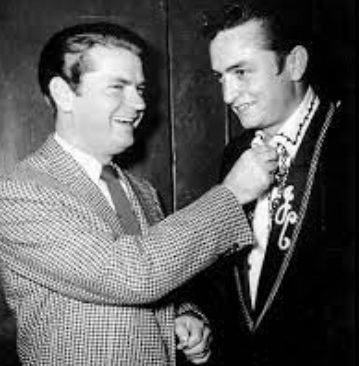
Dick Clark And Johnny Cash
Revised: September 03, 2007.

|